Canada Reads 2026—join me

Canada Reads 2026 Contenders are on the top shelf (you can see previous years on the shelf below)
The theme this year is building bridges - finding stories that expand our horizons by connecting us to novel people, places and perspectives. The one great book to build bridges that all Canadians should read.
Follow this blog to get the best reviews of the contenders as related by Bella, Steve and the Bumbleberry regulars: Henry, Betty, and Frannie. They are taking a winter break from the Trouble in the Terroir goings on in the County and started a book club that meets regularly in the Bumbleberry Cafe.
Hmmm… who will be finished first? Find out soon,
Deb
It's the end of February in Ottawa, and some days it feels like the only event to look forward to is another dump of snow.
Unless, like me, you follow Canada Reads — the Canadian Broadcasting Corporation (CBC)'s annual literary competition. Whether or not it's an intentional strategy to have the event span the winter months, for me it's brilliant. I want to share my enthusiasm with you over the next few weeks as the contest ramps up to the cross-country debates and the selection of a winner.
Today, we'll discover what the contest is all about and which books have made the 2026 short list.
A Short Background
First aired in 2002 on CBC Radio One, Canada Reads is one of the most popular and important promoters of English (and French — Le Combat des livres) Canadian literature. Over 25 years, it has become a treasured, iconic cultural event. Here's why.
There's no monetary award like the Scotiabank Giller Prize, but the publicity for featured books — first the top 10, then the top 5 — sends sales soaring. In the early days (2008), all five books saw an average sales increase of more than 4,200 per cent. What author wouldn't love that! Publishing companies benefit too, and donate a portion of their proceeds to organizations promoting Canadian literacy.
Celebrity panellists champion one of the five books over the five-day debate, but Canadians across the country get involved — listening, watching, voting in tie-breaker polls, and engaging through social media. CBC also supports outreach with public libraries, offering engagement kits so they can host their own Canada Reads events.
If I haven't convinced you to check it out yet, take a look at my library
Henry Cando Reviews
Foe by Iain Reid
“Well ladies, Brut and me chewed on this one a good while, and I'll tell ya — it's a peculiar tale.” Henry settled back in his favourite café banquette. Brut snuggled in beside him and closed his eyes; after all, he'd heard it all before. “The fella at the center of it is named Junior, and the whole shebang is about him and his wife Henrietta — Hen, he calls her. Now these two live way out on a farm in the middle of nowhere, in a house worn down by the elements where if it isn’t the roof leakin', then the windows don’t shut."
Adjusting his reading glasses he checked his notes then continued. “I said to Brut, I said, now there's a couple a man can understand.” He looked around the table. “Y'all are newcomers to the County, but back in my day, before every second barn got turned into a boutique winery—no offense Bella—and every farmer's field sprouted a lavender maze for the tourists, me and Mary lived that same sort of life. Worked sunup to sundown, family 'round the table, and company? Well, company was whoever dropped in at Christmas whether you’d invited them or not."
"Henry," Betty cut in, tapping a manicured nail against her mug, "what on earth do your farming days from forty years ago have to do with this book?"
“I'm gettin' there, Betty, hold your horses." He took a long, appreciative sip of whisky infused coffee and reached for one of Frannie's chocolate chip cookies which disappeared in a bite, leaving a crumb moustache stuck to his stubble. “Now picture this. You're out on that lonesome farm, blackness smothering you at night, not a light from there to Picton, and middle of the night — headlights come crawlin' up your lane. Well, that'd put the fear into anybody, wouldn't it? That's just what happens to these two. A stranger knocks on the door and tells 'em Junior's been picked, like a blue ribbon hog at the county fair, to go off on some experimental trip to outer space. Can you beat that?"
Bella's eyes went wide over her coffee cup.
“So, the story sort of moseys along — and I'll tell ya, this Reid fella, he doesn't waste words, writes simple-like, no four syllable fancy stuff. Anyway, the closer it gets to Junior leaving, the more the idea of her husband being gone for years starts niggling on Hen. She gets cool with him, snippy-like. They start squabbling. Not the throwin'-plates kind, mind you, just that quiet, slow-burn kind where two people sit at the same table and somehow manage to be in different townships."
He leaned in like he was about to share a secret.
“Now here's where it gets queer. That stranger tells Junior his corporation — whatever that means — has a little arrangement worked out so Hen won't be lonesome. They're gonna send a robot fella to the farm. A robot built to be just like Junior. Same face, same voice, same bad habits, I reckon."
Bella blinked. “A robot? Henry, this must be set in the future then?"
“Oh. Yeah. Didn’t I mention that part? It's one a them utopian deals, where the big shots up top run everybody's business —men with control issues."
“Dystopian, Henry," Betty sighed.
"Maudit, Betty, arrête donc!" Frannie threw her hands up. “This story is already slow as molasses; let the man finish! Henry, get to the good part before we all grow old."
“Harrumph." Henry gave them both a look over his glasses. “Well, you’re not wrong, Frannie — put me to sleep more than once, I'll admit. Brut here too. Put his paws over his ears and off he drifted. But I'll give the writer fella credit. He wrote about that couple like he'd been married himself a time or two. You could feel them reachin' for each other and missin' by a mile. Two hands fumblin' in the dark."
He pulled a little treat from his flannel pocket and Brut took it with the patience mirrored by Henry’s audience.
“Now the ending. Oh, the ending snuck up on me like a skunk under the porch. I did not see it comin'." He took another slow pull of his whiskey coffee, drawing it out. “You wanna know?"
Three heads nodded in unison.
“Turns out — and I read it twice to be sure — the Junior we been followin' the whole durn book was the clone robot. The real Junior was up in space the whole time. And when the real one comes back, them corporation fellas just switch off the robot like you'd unplug a kettle. Decommissioned, they called it. Fancy word for the scrap heap." He shook his head. “And Hen — well, Hen was madder than a wet hen, pun intended,” he grinned. “Cause she'd figured out somewhere along the way that the clone fella was actually a decent sort. Listened to her. Noticed things. And her real husband? Well, he came marchin' back expectin' the bacon on the table and little lady in his bed, everything just like he left it."
Henry shrugged.
“So one mornin' Hen walks out the door and doesn't come back. Not to him, not to the farm, not to none of it." He paused, letting that hang in the air a moment, then wagged a finger. “But hold your horses, ladies — that ain't even the kicker."
He raised his mug as a toast to the grande finale.
“Last we see of ol' Junior, he's sitting there chatting away with a sweet, agreeable Hen, just like the good ol' days. Only somewheres along the line — and the author doesn't draw you a map, mind you — Hen got herself swapped out for a clone too. Don't ask me how she ended up there 'cause I sure couldn't tell ya. But there she is, smilin’ and making Junior happier than the flesh-and-blood version ever did."
He let out a low whistle and scratched Brut behind the ears.
“Now ain't that something to dwell on? Cuz I’m not pretending to see how this tale is building bridges for the readers like the contest says. I reckon it's more a cautionary tale — every married couple out there chasin' after perfection might just be better off ordering a robot from Amazon." He took another sip and stared into his mug. “I gotta say… I don't know what my Mary woulda made of all that. She'd probably have whacked me with a tea towel just for thinkin' it."
Brut thumped his tail once in solemn agreement.

Its a cold March evening. It seems like winter will never come to an end in the County. But the Bumbleberry friends have it covered. All of them except Steve, who is working an evening shift, are congregated around a platter of Frannie’s treats and Henry’s spiked coffee to talk about the first Canada Reads contender: Foe. Henry chose to go first….
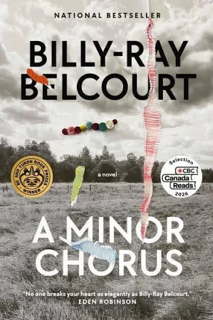
Brunch at Henry's: Bella Reviews A Minor Chorus
Early April sun slanted through the kitchen windows of Henry's farmhouse, catching the steam rising from a cast-iron skillet where the last omelet was folding itself into creamy, cheesy submission under his ancient spatula. Brut’s beagle barks greeted the guests as he wound through their legs sniffing for an elevenses treat which Frannie slipped him from her cardigan pocket.
The farmhouse had what Betty liked to call "the look" — that particular arrangement of a widowed bachelor's home; it was clean enough but still cluttered with his wife’s bric-a-brac and feminine touches. The kitchen theme was ‘mismatch’. A geranium on the windowsill, a gift from Candace, his granddaughter, had one promising red bud, while the violet’s leaves were grey and crisp. A linen tea towel from the 1988 Calgary Olympics was still in rotation even though Bella had given him a set of kitchen towels for Christmas. On the table waiting for the coffee to finish brewing, were four mismatched, lightly chipped mugs and one good one, which Henry had wordlessly set in front of Bella. After all, she was the esteemed presenter.
"Bread's still warm," Henry said, sliding a board onto the scarred pine table. A dish of pale farm butter, and a jar of Betty's saskatoon jam, it’s handwritten label half-peeled off, surrounded a crusty round loaf that sent up wafts of whole wheat and molasses. "Coffee's strong. If you want it weaker, there's the tap." He plunked the pot on the table.
"Henri, mon vieux romantique, où sont les napperons?" Frannie asked teasingly.
Henry responded testily. “Napperons? Are you inferring I wear diapers?”
Betty giggled. “Napperons are doilies Henry. I’m sure Mary must have used them.”
"Oh, those fussy things. Used ‘em as kindling. Asked Mary for forgiveness after.”
Betty laughed and began buttering bread with the focused energy of a woman who hadn’t been able to enjoy her Sunday sleep-in and needed to be compensated by carbohydrates. Steve, still in his OPP-issue wool sweater from the overnight shift, yawned and lowered himself carefully into a chair hoping it wasn’t the one that wobbled.
"All right, Bella," Steve said, reaching for the coffee pot. "You haven’t put that book for two days. Let's hear it."
Bella held A Minor Chorus by its binding. The pages flipped open naturally to text of interest that she had revisited and studied during the reading. Placing it next to her plate, the cover of the slim paperback curled open. Any book lover would recognize dog-eared folds on specific pages that suggested genuine, engaged reading. She cleared her throat. Frannie loudly whispered, “That’s her board meeting call to attention."
"Okay. So. This is my pitch for the fourth Canada Reads contender. I'll say upfront — it's not our usual. It's not a sport, paranormal or romance story. And sorry, there's no dead body —"
"Dang," Henry muttered.
“Bien sûr.” Frannie agreed.
"— and I'm recommending it anyway. It’s Billy-Ray Belcourt’s first novel but it reads more like an academic autoethnography most of the time.”
Henry put down his fork. “Bella, English please.”
“Hmm, think of it this way," Bella said, reaching for her coffee. “When a writer uses their own life to answer important questions, it is called autoethnography. A fancy word for self-research that starts with an aspect of their own story —memories, family, conversations they've had, interviews— and they use that to tell you something bigger about the sociocultural world they come from."
"So, it's a memoir with thinking involved." Henry said.
"Exactly that. It's memoir that's trying to make a point, not just about the writer, but kind of an insider perspective of situations that outsiders don’t get. For example, Belcourt is a queer, Cree writer brought up by his grandmother in a northern Alberta reservation. He started as a poet and non-fiction writer then completed a master’s degree in women’s studies. His doctoral thesis was called The Conspiracy of Indian Joy. I tell you this so you know his perspective is unique and the book is — honestly— the book is strange."
"Strange how?" Betty asked, mouth full of bread.
"Strange in that it isn't a run of the mill novel. There's a narrator, which sounds like Belcourt himself, who has writer’s block during his PhD dissertation. He takes a break and starts having conversations with people — his aunt, cousins, old classmates, men he meets on Grindr, a closeted childhood acquaintance. Those conversations are the book. It's built like a chorus. Lots of voices, but no central plot."
Steve frowned over the rim of his mug. "No plot. You're selling it beautifully."
"I know how it sounds. Hear me out. The thing is, I came at the book the way I come at everything — I'm a nurse, I like evidence, a question that needs solving, and a reasoned conclusion. So, the first thirty pages I was ready to put it down. The prose is dense. For instance…” Bella checked her notes. He writes sentences like 'To whom or what does the body plead?' and part of me wanted to write 'to its cardiologist' in the margin. But then you close it for awhile and think about your interpretation.”
Frannie snorted coffee.
"But then Aunt Mary calls him, telling him how her grandson Jack got arrested — she heard the whole thing happen over the phone. And Belcourt writes that his body reacted as if he were hearing that kind of story for the first time, even though he'd heard it a hundred times before. Reading that, something shifted for me. Because that's a thing I recognize from the hospital. You see the same kind of tragedy come through the doors over and over, and one day one of them pierces through you like you've never seen it before. He named something I knew but wasn’t able to verbalize."
The kitchen was quieter now. Steve contemplated his coffee.
"I'll say this carefully," he said, "because I know where you're going with that one. I've been on calls I'm not proud to be a cop. I've also been on calls where the version that gets told later bears no resemblance to what happened. Both things are true. Does he do both things, or just the one?"
"Mostly the one," Bella said. "He's writing from inside the community, and he's angry. I think he's earned the anger. But, no matter. All readers can take something from it without having to like every sentence."
"Fair enough."
"Is there any fun in it?" Henry asked, in the tone of a man who had once been handed a Michael Ondaatje novel and never forgave the giver.
"No Henry. There is not what you would call fun."
"I withdraw the question."
"However," Bella said, "unlike Frannie’s review there is emotion, communication. He says writing is a social act. It is a tribute to having been loved and wanting to be less alone. That landed for me. It’s not academic. It’s his truth."
Betty, who had been quietly demolishing a second slice of bread, looked up. "That's lovely, actually."
“Yeah, it is lovely. I sat with that one for a while too."
"At the kitchen table or in the tub?" Frannie asked.
"Tub. With wine. Ask Steve, he came in to top me up.”
They all stared at Steve simultaneously and were rewarded when his ears turned beet red. “Bella, enough now.”
"OK. Moving on. I admit I read some of the book’s critiques. The complaints are real: overwritten, pretentious, self-absorbed narrator. There were no quotation marks around the dialogue, which drove me crazy for twenty pages, then I stopped noticing. Some readers felt the novel was overloaded with social-justice vocabulary that many are getting tired of."
"And?" Steve asked.
"And I think some of that's fair. He does reach for the theoretical word when a plain one would do. But it's a slim book, 179 pages. You close it, sit with it a day or two, and you already know which passages you'll circle back to." Bella riffled the pages with her thumb; a cascade of folded corners flipped past.”
Henry was refilling coffees. "So why Canada Reads? Why pitch it as a book all Canadians should read? "
"Well, I’m thinking this is a real contender. Frannie was complaining about the lack of Canadian content in her book. Well, this one is saturated in it. The author won accolades and scholarships for his writing at an early age—someone for us to be proud of. And the book does change the narrative —between academic writing and fiction, between memoir and novel, between prose and poetry. It brings new conversations into the nation’s kitchens and living rooms. As Belcourt says, a book doesn't have to change the world, but it can mark the wanting, the longing, for something better.”
A pause. The woodstove ticked. Steve cut himself another slice of bread with the deliberation of a man thinking.
"All right, I’m convinced" he said finally. "I'll read it. But if I hate it, I may smother you all with true crime with my next pick."
"Deal.”
Betty proposed, "I vote Frannie and I listen to the audiobook. It’s free and invisible, so it won’t clutter up our bookshelf.
" Une super idée, Papillion!" Frannie said. "Henri?"
"I am not reading it."
"Henry."
"Fine. I'll read the first chapter. If there's a farm in it like my last one, I'll keep going."
"There is no farm in it, Henry."
"Then I'll still read the first chapter. If it wins the contest, I might finish it."
Out the window, a ragged V of geese honked their arrival to the County. Inside, Betty and Frannie were fighting for the last slice of Henry’s homemade bread. The coffee was strong and the Baileys chaser mellowed out the friends. Brut’s ears were twitching as he snoozed on Betty’s canvas bag, which held the final book contender, The Cure for Drowning. Perhaps spring fairies were singing him a lullaby.
Bumbleberry Book Club: Steven Boyd’s Report on Searching for Terry Punchout
Steve grappled in the pocket of his time-worn leather jacket, finally producing a writing pad that looked similar to his police notebook. Flipping it open he cleared his throat and began.
Book Report: Searching for Terry Punchout by Tyler Hellard Genre: Fiction. Reviewing Book Club Member: S. Boyd
Summary of Events:
Main character: Adam Macallister. He is a young sports journalist who loses his job in Calgary and returns to his small hometown in Nova Scotia. His purpose is to write a feature for Sports Illustrated on the NHL's all-time career penalty minutes leader, known as Terry Punchout, real name: Terry Macallister. He is Adam’s estranged father. Terry sustained an injury that ended his career. He relocated to his hometown and became a reclusive, unpaid Zamboni operator and general maintenance guy who lives for free in the rink building.
Frannie plunked her spiked coffee mug on the table. “Mon dieu, Steve, c’est ridicule! No one lives in a hockey rink.”
“Look, I didn’t write the story – not my idea.”
Checking his notes, he continued in chronological fashion. “Adam, the son, holds impersonal interviews his dad, who he is angry with for leaving Adam’s mom when she was ill. As he hangs around in town, he meets a lot of friends he grew up with and slides into teenage nonsense again, drinking and hanging out with the guys, playing inebriated hockey. A girl from high school who he really liked and is still attracted to, seems to be the only one who has matured. She is a single mom raising a son. Adam briefly attempts to resume a relationship with her. Results: inconclusive—."
"Inconclusive?" Betty cut in, chuckling. “C’mon Steve. Give us a reason to read the book. Did he or did he not score?"
"On the ice or with the girl?" Bella asked mischievously, swirling her wine.
Steve gave her a smirk and a glare that had no effect. It rarely did.
"I'm getting there. Results of hockey attempt: unsatisfying for Adam—he can’t resolve old wounds with his best friend and fights on the ice. Results of reconnecting with girl friend: Shared memories together. He likes her son and imagines what his life would have been like with her, but by the end of the book there’s no indication that they reconnect. Results of being with his father: Memories healing and hurtful surface during their discussions. Father and son begin a process of cautious mutual reconnaissance—
"Cautious mutual what? Brut, did you get that? Sounds like a stakeout." Brut flapped droopy beagle ears in annoyance—either because Henry disturbed his nap or he was trying to dislodge the ridiculous beanie his master had insisted he wear to the meeting.
“My Observations, Steve continued nonplussed at the interruption. “The characters are flawed. They communicate poorly and indirectly, particularly regarding emotional matters. This was painful to read but consistent with my observations of human behaviour.
I liked that the novel was short and didn’t lag along the way. Some down east humor broke up the tension but the emotional breakthrough between father and son toward the end was rather unsatisfactory. I would like to have seen more resolution of their friction. I just didn’t get that part. I can’t imagine being in a strained relationship with any of my family members.
"Steve." He looked up at Betty, outfitted for the occasion in a maritime-themed apron and passing snacks his way. "Are you saying that you wanted more feelings in the book?"
Four pairs of eyes locked in on him as he paused.
"I'm saying the case file was incomplete."
"Well okay. I choose to interpret that you would have preferred emotional closure."
Henry was openly laughing. "Bella, I think Bett’s right. Your boyfriend just admitted he wanted to read about two men processing their feelings."
"I move we read Heated Rivalry as a book club pick for next month," Bella said cheekily.
"Seconded," said Betty.
“What’s that about?” Henry tipped back the last dredge of coffee.
“Henri, vis tu dans une caverne ou quoi?” Frannie gave him an eyeball roll and ran her fingers through her wiry mop. “Check it out on Crave.”
Steve, who had survived as an undercover cop in Toronto, and a relocation to policing in the County, accepted his reward of whisky coffee with the quiet dignity of a man who knew when he had been outflanked.
Frannie Reviews Different This Time — Bumbleberry Book Club Night at Bella's
Frannie marched into Bella's kitchen tying on her "I'd Rather Be Reading a Good Book" apron — the one she usually saved for tax season and spring cleaning. Betty clocked it immediately and elbowed Bella in the ribs.
"Oh là là, she's wearing the grumpy apron. This is going to be good."
"I need something fort to drink tonight, Bella," Frannie announced, setting her hardcover down on the kitchen counter with a thud loud enough to make StinkEye bolt. " I can’t believe I spent money on a hardcover and then proceeded to read this book trying to keep an open mind. That didn’t last long, I tell you."
Bella obediently splashed something amber from her own winery into a teacup. "That bad?"
"Bella. Bella. Sit down."
Steve gave Bella an ‘I’ve got the pizza’ look and then turned his back to his guests with relief to monitor progress in the oven.
Henry, who had been quietly helping himself and Brut to the antipasto delectables on the table, perked up. "Uh oh, Brut, she's doin’ the voice, I know that tone."
"As it happens, Henry, I am doing a review in the tone necessary to portray mes opinions." Frannie flipped open her book, which Henry noted with dismay was bristling with sticky notes in three different colors of disapproval.
“Okay folks, take a seat. Pizza is served.” Steve’s rich voice and the smell of a homemade pepperoni and cheese pie settled everyone down momentarily. But Frannie was too wound up and started her review.
“Bien. Different This Time. Which the story certainly was. You know I’m a not a sucker for romances Bett, read a third of dozens of them, but this book took the most annoying prize."
But Frannie took a fortifying bite and sip of wine then began. "Fine. The premise. There's a girl named June Wood. She had a TV show in Los Angeles, and the TV show got cancelled, which is upsetting and completely believable—"
“Francine!"
“until she gets an email about a brownstone on Perry Street in New York City. Apparently, through some legal hoopolla, and the author's wild imaginaiton, if June and her former best friend Adam move back into this brownstone together for one month, they get to keep it. In Manhattan. In the West Village."
Bella blinked. "Wait. Free?
“Ben oui."
"That's... that doesn't...that is way out there!”
Betty, taking Frannie’s usual job, set down a fresh plate of madeleines. "And the boy? Adam?"
Frannie's eyes went heavenward. "Adam. Oh, Adam. Adam is the kind of man who tells his roommate, with a straight face, that he'd be devastated if she ever dated someone else — and then she walks into the hallway five minutes later and finds him with his hand halfway up some other girl's shirt."
Bella choked on her tea. "He doesn't."
"He DOES, Bella. And we are supposed to find this romantic. We are supposed to read this and think, ah yes, here is a man who knows what he wants. No. Here is a man who needs a calendar, a therapist, and possibly a cold shower."
Henry was wheezing now. “Fran, you're going to give yourself an aneurysm."
“I welcome it, Henry. It would be more interesting than chapter fourteen."
Betty, who had been quietly turning pages of her own copy, looked up. “But the writing — no, the writing isn't bad. Some of the sentences are very pretty."
“A pretty sentence cannot save a stupid plot. You can put a beret on a goat, it is still a goat." Frannie thumped the book again. "And the length. This book is four hundred pages long. Four hundred. I timed it. Of those four hundred pages, approximately eleven are necessary. The other three hundred and eighty-nine are June staring out a window thinking but what does it MEAN. It means you're avoiding a conversation, June. It means go knock on his bedroom door."
"My favourite trope," Henry said dryly.
"Henry, the miscommunication trope is not a trope, it is a moral failing. Every single barrier in this book — every single one — would evaporate if these two people sat down at a kitchen table" — she gestured grandly at Bella's kitchen table — "this kind of kitchen table, with two cups of coffee and twenty minutes of honesty, and said, 'Hello, I have feelings. Do you also have feelings? Wonderful. Let us proceed.' That's it. That's the book. I just saved you four hundred pages."
Bella was laughing into her sleeve. “Frannie, you should put that on a tea towel."
"Don't tempt me, I will."
Betty tilted her head. "So. Trois étoiles? Deux?"
“ I would give it one star, but I'm worried the star would feel insulted to be associated with the story." Francine took a long, dignified sip. "And ecoutez — listen — I haven't even gotten to the worst part. This book is on the Canada Reads list."
A hush fell over the kitchen. Even Brut, asleep on the windowsill, seemed to sense the gravity.
"Canada Reads," Fran repeated. "Canada. Our Canada. And this book is set entirely — entirely — in the United States of America. Los Angeles. New York. Not so much as a Tim Hortons in the background. Not a single 'sorry,' not a loon, not a lake, not a single character who has ever owned a parka. I checked."
"You checked?"
"I checked, Henry. I had a notebook."
Henry shook his head admiringly. "Of course you did."
"I am telling you — and I will die on this hill, and you may bury me in this apron — this is the worst Canada Reads book of all time. And I have read some clunkers in my day. I read the one about the guy and the canoe. I read the one where nothing happened in a lighthouse for two hundred pages. Nothing compares. This is a whiny, manufactured, transcontinental disappointment, and I want my evening back."
Bella, wiping her eyes, finally managed: “ Frannie. Tell us how you really feel."
The moderator smoothed down her apron with great dignity. "I feel, Bella, that next month I am choosing the book. And it will have a body in it. By chapter two."
“ Gracious, yes," said Betty, raising her teacup. "To bodies in chapter two."
"To bodies in chapter two," they chorused.
Henry, the only one not drinking, reached for another shortbread. “And to never letting Frannie pick the apron again."
She swatted his hand. He stole the cookie anyway.
__________________________________________________________________________________
Betty Quinn Reviews
The Cure for Drowning
By Loghan Paylor
The sidewalk outside the Bumbleberry Café door was decorated with broom patterns. Any way to sweep the dusty, salty remnants of winter was welcome. Even the tinkling of the bell when Bella and Steve opened the café door sounded lighter, cheery. A cross breeze from the open back door carried an aroma of soup from the kitchen straight to Steve’s stomach. It rumbled in anticipation as he hung both their jackets up. The chalkboard menu had been wiped clean of the winter’s root-vegetable stews and rewritten in looping green chalk: Spring Pea & Mint Soup. Asparagus Tart. Rhubarb Delite.
“Do you think that’s on the menu for our book club meeting?” Steve asked Bella hopefully.
Henry overhead the question from the banquette "Frannie, you've gone and got us all hopeful with that food billboard of yours. Henry was adjusting himself into the corner with Brut riding in his over the shoulder sling. "We goin’ to be the guinea pigs for your new spring dishes? No more tourtière?"
"The tourtière is stored with the winter parkas, Henry.” This season its tarts and tortes.”
Steve slid into the booth. “Tart as in asparagus tart, Frannie? Sounds delish.”
"All right, mes amis, I see you brought your appetites to the book club. You can start with the soup and these.” She set down bowls of pea and mint soup and planted a basket of warm scones between them. “Papillion, you must wait. My soup will be your reward for revealing this story to us.”
“Ok. I’m up and excited! This one’s the winner. No doubt.” Betty straightened her apron, drawing attention to the Disney-like flowers and fairies fluttering about her curves. Sitting at the head of the banquette, she placed the novel beside her plate with genuine affection. “ The Cure for Drowning has everything you could possibly hope for in a story: Irish folklore, changelings, gender conundrums, passion and romance, class distinctions, family feuds and reconciliations, social disruptions of war, action, courage, and finally, a satisfactory ending for a change.”
“Whoa! That’s a lot of topics to stuff into a tale, Bett.” Henry wiped unattractive drops of green soup off his chin. “Makes my Foe sound unidimensional.”
"About that,” Betty resumed, “as a first novelist, Loghan Paylor, a Canadian from BC, is a top-notch writer. The way they write about the settings of the story is descriptive, not wordy with flowery adjectives, but evocative. Love and sexual desire is described by the minutiae of the relationship, not graphic sexual acts. I like that – they make you visualize and feel where the characters are at a point in time what the do. That’s important because the time frame spans 1931 – 1947.”
"So wartime Canada? I enjoy reading historical accounts like that.”
“Well, don’t get excited. This is not one of those non-fiction books on the analytical, strategic overview of combat. It tackles the hidden issues of gays in the forces, the emotional and social impacts of sending our men to war and not having them return, or sometime worse, having them return unexpectedly.”
“Got it. I may pass on this one.”
“Well, you may want to reconsider, ‘cuz I decided we are so close to the Canada Reads debates, I am not going to spoil it by telling the whole story.” Betty dramatically looked at each of them. “I will give you the beginning that introduces the main character, then see if you can resist.”
Taking a minute for sustenance, Betty delicately quartered a scone and spread it with butter.
"So. The story opens with a scene that stopped me cold. A ten-year-old girl walks into the forest with her two brothers on the worst Ontario winter afternoon of 1931 — and she does not come out again. She falls through the river ice. She drowns. Her brothers bring her frozen body home. But her mother, Caroline, refuses to let her go. She says her Gaelic prayers over her, and she uses what the book calls Celtic magic — the old ways, the ones you bring with you across the ocean in your pocket — and after three days the child wakes up."
"Three days," Bella murmured, and glanced at Steve. Steve raised an eyebrow a quarter of an inch, which was Steve for yes, I noticed too.
"But," Betty said, lifting a finger, "she wakes up changed. The family calls her a changeling. Her name was Kathleen before. Then she becomes Kit. And Kit is — well, Kit does not fit the farm-girl life her parents expected of her. Kit wears her brother’s clothes, does boys' farm chores, race trains on horseback. Her poor mother is beside herself."
"Sounds like your stories at twelve," Frannie said.
"I was a tomboy, Frannie. I was not a changeling."
"Are we sure?"
"Frannie."
Steve spoke up behind his coffee: "Can confirm Betty is not an Irish fae. I signed her passport."
Betty swatted at him with her napkin. She took a breath and went on.
"Now here's what I loved. The McNair family has this origin story they tell — that their great-great-grandfather fell in love with a selkie. You know selkies, Bella? Seal women, in the Irish stories. They come ashore and shed their sealskin and walk among us, and if you love one you have to let her go back to the sea eventually, or the salt in her blood will ruin you. And Paylor uses that story like a — like a thread running through the whole book. The shedding of the skin. Becoming who you really are underneath. It's woven right into Kit's whole journey."
"That's lovely, actually," Bella said.
"It is lovely. Now. Flash forward to April 1939. War's coming. A new family moves to town — the Kromers. German-Canadian, which is not a comfortable thing to be in small-town Ontario in 1939. The father's a doctor. The daughter is Rebekah, and she is elegant, and the minute she lays eyes on Kit — who by now is nineteen — she knows exactly who Kit is. No confusion. No fuss. Just — I see you. And the two of them fall into each other."
"Ah," said Frannie, who was a romantic under all the sarcasm.
"But," Betty said, "Kit has an older brother. Landon. And Landon wants Rebekah too. And so you've got your love triangle — and Paylor is smart enough to know it was never an equal triangle. The real current is always between Kit and Rebekah. And then the war breaks everything apart.” Landon joins the Navy, and Kit —"
She paused for dramatic effect.
"— Kit steals an army uniform and identification papers of a boy on a train, walks into a Royal Air Force recruiting office as Christopher McNair, and becomes a bomber navigator."
"Mon Dieu," Frannie said.
"Now that," Henry said, "is a way to leave the farm.”
Betty plowed on. "The novel then splits between Kit's voice and Rebekah's alternating voices — both of them beautifully distinct.”
"And here," Betty said, "is where I have to tell you about the magic. Because this is not a ghost story, exactly. It's not fantasy. But there is a shimmer over the whole book — a sense that Kit is protected somehow. That ancient Celtic ways are still working in the background. I had shivers, honestly. I had to put the book down twice and just sit with my tea."
“Tea, Betty?”
“Well, Henry’s version of tea. Need a splash of whisky to get rid of the chills, eh?”
Betty gathered herself. "The war changes everything and there are shocking turns of events. I am not going to spoil it for you because you all need to read it yourselves. But I will say this. The ending is poetic. It is hard-earned. And love does triumph — but not in the tidy way you expect."
She closed the book. "It's called The Cure for Drowning because Kit drowned as a child, and was brought back by magic. But the real cure for drowning in this story is being seen. Being loved as who you are and not who the world tried to make you. Which — if you ask me — is what all the best books are really about."
There was a small, respectful quiet.
Bella broke it, softly: "Betty, that was beautiful."
"I told you she'd been carrying that book like a precious." Frannie’s voice had gone gentle.
Henry cleared his throat. "So this Kit. This Kit's got a bit of changeling. Selkie. All of that."
"Yes, Henry."
"And you — you, who consults the stars before you pick a new apron —"
"Henry, I do not consult the stars about aprons —"
"— you felt a kinship with this book."
"I felt a kinship with this book."
Henry nodded slowly, with the air of a man arriving at a grave verdict. "Well. I'm convinced. Betty, you're a selkie."
"Henry."
"It explains a lot. The hair. The way you know when it's going to rain."
"Henry."
"Don't worry. Your secret's safe at this table." He glanced at his comrades. "Right, Brut?"
Brut roused himself and gently nibbled the offered bribe, a piece of scone: "See, Brut won’t give you up Betty."
"Arrête, arrête, arête. Frannie said laughingly “Betty, put me down as the first to borrow the book. Today. Put me down for it."
"Me too," said Bella.
"Put me down as well, but no rush. I’ll settle for a summer read.” said Steve, which was the best affirmation Betty could get.”
Henry raised his coffee cup. "To Betty's choice. And to all the changelings and magic at this table, especially Frannie’s kitchen magic—don’t forget the rhubarb delight Fran, it’s in the menu."
Outside, the April wind was working on the last of winter, and inside, a mason jar of pussy willows and tulips sat on their table. The breeze flowing through the Bumbleberry Café was filled with possibility. Betty slid the novel carefully back into her bag. She would lend it to Bella first. She’d get through it neatly and appreciate the quiet parts. Frannie would understand.
And Canada Reads could take care of itself. Betty already knew which book had her vote.